

Introduction
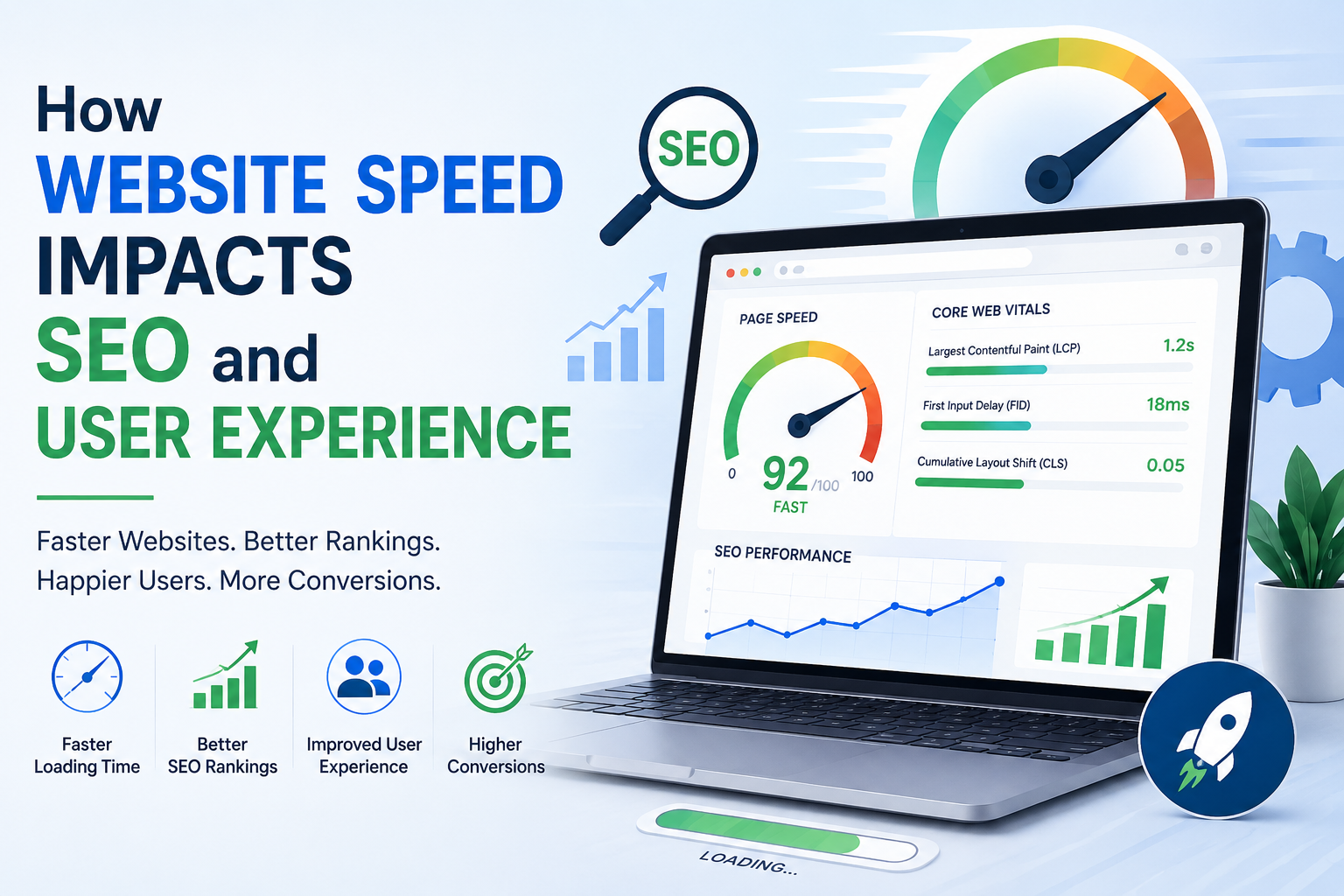
Website speed and SEO are closely connected. A fast-loading website helps visitors find information quickly and creates a better user experience. In addition, website speed and SEO work together to help search engines understand and rank your pages more effectively.
Today, users expect websites to load within a few seconds. If a website takes too long to open, visitors may leave and look for information elsewhere. As a result, businesses with fast websites often achieve better search rankings, higher engagement, and more conversions.
Today, people expect websites to load within a few seconds. If a website takes too long to open, visitors may leave and look for information elsewhere. As a result, businesses with fast websites often achieve better search rankings, higher engagement, and more conversions.
Why Website Speed Matters
Website speed affects how visitors interact with your website. A slow website can frustrate users and reduce customer satisfaction.
A fast website can help businesses:
- Improve user experience
- Increase customer engagement
- Reduce bounce rates
- Build trust with visitors
- Increase conversions
When users can quickly find the information they need, they are more likely to stay on the website and take action.
How Website Speed Affects SEO
Search engines want to provide users with the best possible experience. Because of this, website speed is an important ranking factor.
There are several ways website speed and SEO affect each other:
- Faster websites are easier for search engines to crawl
- Quick-loading pages can improve search visibility
- Better user experience can increase engagement
- Fast websites often perform better on mobile devices
Therefore, improving page speed can help businesses compete more effectively in search results.
Common Causes of Slow Websites
Many factors can affect website performance. Identifying these issues is the first step toward improving speed.
Common causes include:
- Large image files
- Too many plugins
- Unnecessary scripts
- Poor hosting services
- Unoptimized code
- Excessive animations or videos
Regular website audits can help identify and fix these problems.
The Impact of Slow Websites on Users
A slow website can negatively affect both user experience and business growth.
Some common effects include:
- Higher bounce rates
- Lower conversion rates
- Reduced customer satisfaction
- Fewer leads and sales
- Lower search rankings
Visitors often leave websites that take too long to load, especially when browsing on mobile devices.
Tips to Improve Website Speed
Businesses can improve website performance by following a few simple steps:
- Compress and optimize images
- Choose a reliable hosting provider
- Remove unnecessary plugins
- Enable browser caching
- Minimize CSS and JavaScript files
- Use a content delivery network (CDN)
Even small improvements can make a noticeable difference in loading times.
Why Mobile Speed Is Important
More people browse websites on mobile devices than ever before. Because Google uses mobile-first indexing, mobile performance plays an important role in SEO.
A fast mobile experience helps businesses:
- Improve user experience
- Increase engagement
- Support search rankings
- Encourage conversions
Optimizing mobile speed should be a priority for every business website.
Tools to Measure Website Performance
Businesses should regularly test their website performance to identify areas for improvement.
Popular tools include:
- Google PageSpeed Insights
- Google Lighthouse
- GTmetrix
- Pingdom Website Speed Test
These tools provide useful insights and recommendations for improving website performance.
Website Speed and Business Growth
Website speed affects more than search rankings. It also influences customer trust, engagement, and business success.
Fast websites can help businesses:
- Attract more visitors
- Improve customer experience
- Generate more leads
- Increase sales opportunities
- Build a stronger online presence
Investing in website performance can create long-term benefits for businesses of all sizes.
Conclusion
Website speed and SEO are important for online success. A fast website improves user experience, helps pages rank better in search results, and attracts more customers.
By focusing on website performance, businesses can increase engagement, reduce bounce rates, and improve conversions. As customer expectations continue to grow, investing in website speed is no longer optional. It is an important step toward long-term business growth.